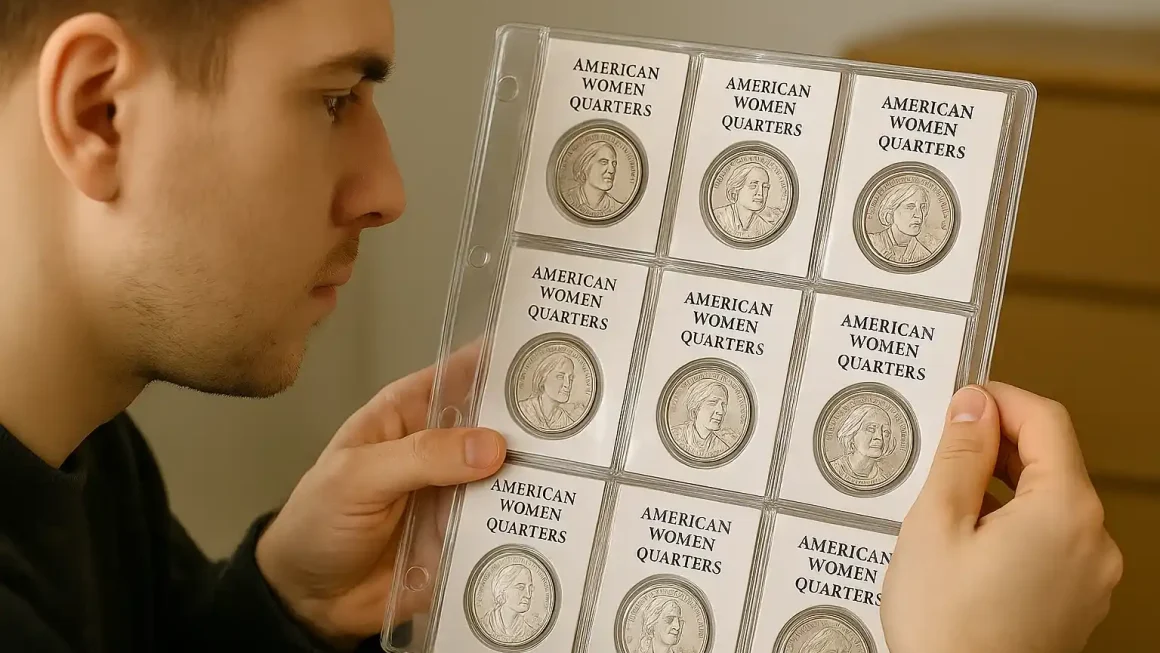
The Edith Kanaka’ole Quarter entered circulation in 2023 as part of the American Women Quarters Program, and it quickly sparked two very different conversations among collectors. One focused on cultural meaning and design. The other centered on price—specifically, what a fair price actually looks like in a market shaped by massive mintages and a handful of premium outliers.
At its core, this coin is a modern circulation quarter. Millions were struck for everyday use, which keeps the 2023 Edith Kanaka’ole quarter worth relatively low in most cases. At the same time, select conditions, proofs, and mint errors have already created price tiers that confuse newer buyers. Paying fairly depends on understanding where a coin sits within that structure.
The program itself provides important context. Authorized by Public Law 116-330, the American Women Quarters series runs from 2022 through 2025 and highlights influential women in U.S. history. The Edith Kanaka’ole quarter belongs to the 2023 lineup, following issues that established a clear pattern: high mintages, modest baseline prices, and narrow premium windows for exceptional pieces.
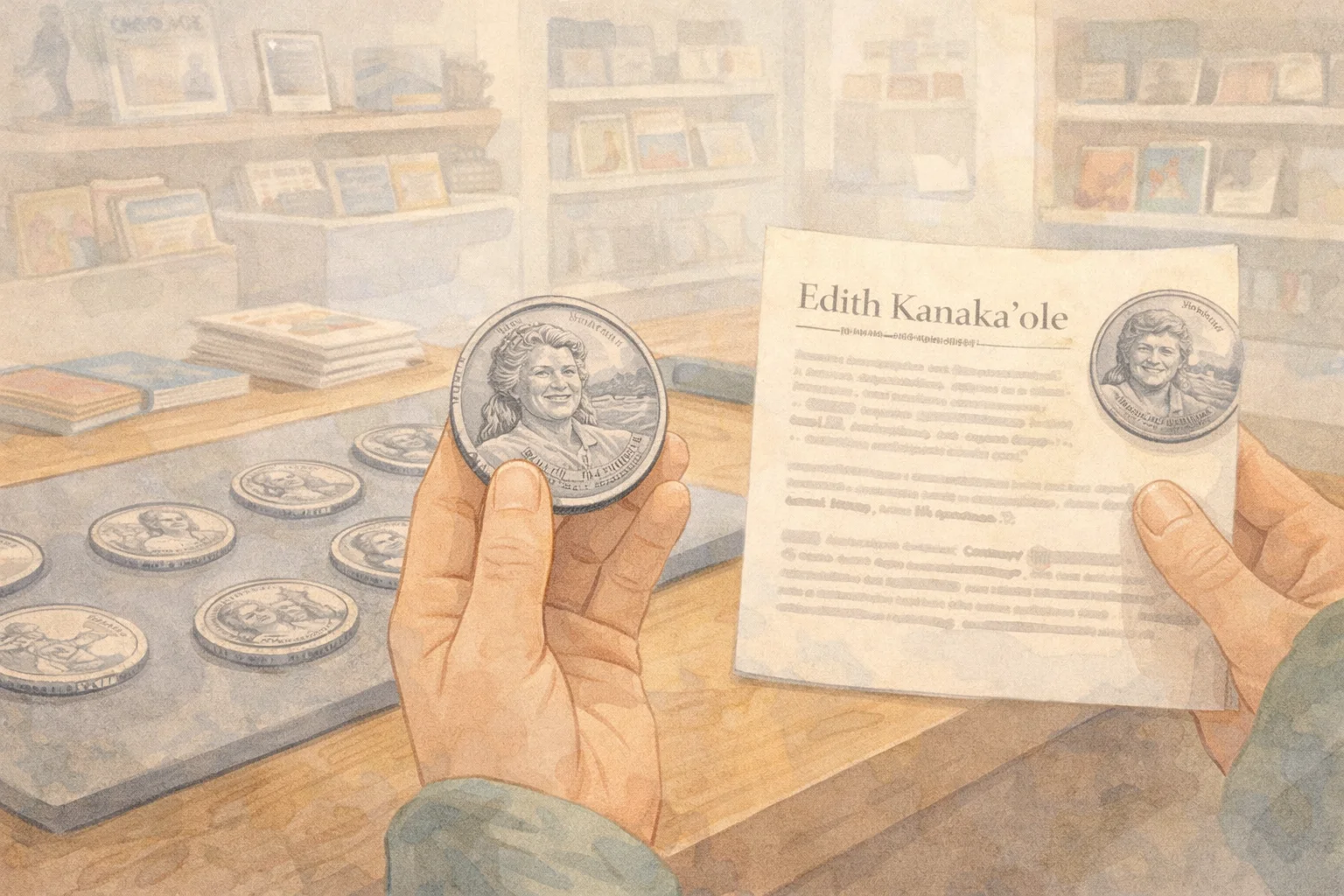
Who Was Edith Kanaka’ole?
Edith Kanaka’ole (1913–1979) was a Hawaiian kumu hula, composer, and cultural preservationist whose work helped revive traditional Hawaiian language, chant, and dance during a period of cultural decline. Her influence extends well beyond performance. She shaped education, protected oral traditions, and helped reassert Native Hawaiian identity in public life.
Her legacy is captured directly on the coin. The reverse design incorporates the Hawaiian chant “E hō mai ka ‘ike”, which translates to “Grant us knowledge.” That phrase alone gives the quarter significance that reaches beyond numismatics.
For collectors, historical weight matters. Coins tied to cultural movements often show long-term interest in coin evaluator records even when short-term price movement stays limited.
Design and Symbolism
The reverse was designed by Emily Damstra and sculpted by Renata Gordon. It presents Edith Kanaka’ole in profile, with her hair transforming into a stylized Hawaiian landscape. Lei motifs flow through the composition, reinforcing themes of continuity and cultural inheritance.
The obverse uses Laura Gardin Fraser’s portrait of George Washington, now standard across the American Women Quarters Program. The date appears beneath Washington’s chin, with inscriptions positioned to balance the strong reverse imagery.
This level of artistic detail influences pricing indirectly. Complex designs place stress on dies during high-speed production at the United States Mint, increasing the likelihood of clashes and minor defects that should be reviewed via the free coin value checker. That mechanical reality explains why some error coins already command notable premiums.
The Baseline Reality: Most Coins Stay Inexpensive
Despite its artistic and cultural appeal, the Edith Kanaka’ole quarter was produced in very large numbers. Combined mintages from Philadelphia, Denver, and San Francisco exceed hundreds of millions of coins. That volume sets a firm baseline.
For most collectors, fair prices fall into predictable ranges:
- circulated examples: $0.25–$0.50
- raw uncirculated MS60–MS63: under $1
- attractive but common uncirculated: $1–$5
Anything priced significantly above those levels needs a clear justification tied to condition, proof status, or a verified mint error.
Understanding that baseline prevents overpaying early. In the next section, the focus shifts to specifications, mint-by-mint output, and how grading creates the first meaningful jumps in value.
Specifications, Mintages, and How Condition Shapes Fair Value
Price clarity starts with fundamentals. The Edith Kanaka’ole quarter follows modern U.S. quarter standards, yet differences by mint and grade quickly separate fair buys from inflated listings.
Core Specifications
Circulation strikes share identical specs across mints:
- composition: copper-nickel clad (91.67% copper core)
- weight: 5.67 g
- diameter: 24.26 mm
- edge: reeded
San Francisco also issued silver proofs, struck in .999 silver at 6.25 g. These pieces carry intrinsic metal value and superior finish, which stabilizes pricing.

Mint Output and Availability
High production defines this issue, but survival in top grades varies.
| Mint | Approx. Mintage | Circulated | MS65 | Top Recorded Grades |
| Philadelphia (P) | ~250M | $0.25–$0.50 | $1–$5 | MS69 (rare) |
| Denver (D) | ~368.6M | ~$0.44 | ~$10 (MS67) | MS68 ($90 outlier) |
| San Francisco (S) Clad | limited | ~$0.44 | ~$11 (MS67) | — |
| San Francisco Silver Proof | limited | N/A | — | $13–$20 PR67–PR70 |
Philadelphia coins dominate circulation and most roll finds. Denver coins are plentiful but tend to show slightly softer strikes, which caps premiums at higher grades. San Francisco clad strikes are scarcer in rolls, adding modest appeal for completeness rather than price spikes.
Grading: Where Fair Price Jumps Begin
Most coins grade MS63–MS65. At those levels, fair prices remain modest. The meaningful jump begins at MS67, where surface quality and strike sharpness become decisive.
Grading focuses on:
- Washington’s hair and jawline on the obverse
- definition within Kanaka’ole’s hair-to-landscape transition
- clarity of lei motifs and lettering
- uninterrupted mint luster with minimal contact marks
At MS69, populations drop sharply. Recorded sales show isolated results—such as a Philadelphia MS69 at $765—driven by extreme condition rarity, not series-wide demand. These are exceptions, not benchmarks.
Certification by Professional Coin Grading Service or Numismatic Guaranty Company anchors pricing at MS67 and above. Raw coins advertised at premium levels without slabs rarely achieve those prices.
Proofs: A Separate, Stable Track
Proof Edith Kanaka’ole quarters appeal to a different audience. Clad proofs typically trade $10–$20 across PR67–PR70, while silver proofs sit slightly higher due to metal content and finish quality. Prices remain steady rather than explosive, making proofs a fair buy for set builders.
For collectors screening bulk lots before grading, quick verification helps avoid wasted fees. Many use Coin ID Scanner to confirm mint, weight, diameter, and composition from a photo, then focus only on coins with realistic MS67+ potential.
Errors, Market Reality, and How to Judge a Fair Deal
For the Edith Kanaka’ole quarter, true price acceleration happens only when mint-made errors enter the picture. Without them, values stay anchored by high mintages and steady supply. With them, pricing shifts into a completely different tier—but only when verification is solid.
Errors That Legitimately Add Value
Collectors have documented several repeatable error types that already command premiums. These are not speculative marks; they show consistent placement and raised metal.
Die clash errors lead the list. These occur when obverse and reverse dies strike each other without a planchet in between. On Kanaka’ole quarters, clashes may show:
- parts of “EDITH” transferred onto Washington’s obverse
- faint Washington facial outlines appearing on the reverse
- mirrored placement that matches die orientation
Clear die clashes typically sell between $100 and $500+, depending on visibility and preservation. Subtle clashes fall lower; bold, easily photographed examples drive the top prices.
Other error categories include:
- grease-filled dies (“In Cod We Trust” style effects): $150–$900 listed, though pricing varies widely by clarity
- off-center strikes: usually $50–$300 when the date remains visible
- die chips and minor breaks: modest premiums unless placement is dramatic
Anything described as an error must show raised metal or transferred design. Scratches, stains, or post-mint damage do not qualify and should be priced as face value coins.
A Reality Check on Error Pricing
High asking prices appear frequently online. Fair pricing depends on evidence, not labels.
Use these benchmarks:
- raw circulation strike, no error: $0.25–$1
- certified MS65–MS67: $5–$27
- proof or silver proof: $10–$20
- verified die clash or strong grease error: $100–$500+
Listings that jump straight to four figures without certification, comparison photos, or sold comps should be treated cautiously.
Certification through Professional Coin Grading Service or Numismatic Guaranty Company becomes increasingly important once prices move beyond $200. At that level, slabs protect buyers and stabilize resale.
Tools That Help Set Fair Prices
Error hunting often starts in rolls and bulk lots. Speed matters. Many collectors rely on Coin ID Scanner for fast screening. A single photo returns a coin card with mint year, composition, weight, diameter, and an estimated price range. That helps confirm the coin is genuine before focusing on error diagnostics.
Its larger database also allows side-by-side comparison, which is useful when judging whether a claimed die clash or grease error matches known examples.
Practical Buying Strategy
Collectors who pay fair prices tend to follow a simple approach:
- buy circulated coins at face or small premiums
- pay modest amounts for certified MS65–MS67
- reserve higher budgets for verified errors only
- ignore hype tied to raw coins with vague descriptions
As the American Women Quarters Program approaches its 2025 conclusion, attention will consolidate around standout issues and documented errors. The Edith Kanaka’ole quarter already shows how that process works.
A fair price for an Edith Kanaka’ole quarter depends entirely on what makes it different. For most coins, that difference does not exist—and face value remains fair. For a small number with top-tier condition or proven mint errors, fair prices rise quickly but stay grounded in evidence.
Collectors who separate baseline coins from genuine standouts avoid overpaying and position themselves on the right side of this modern series.